
01
What was your routine like before Fitcave?
I ran six days a week. Monday was my only off day. The rest of the week was easy short runs, and the weekend was my long run.
Fitcave stories · Farina Selamat
Farina ran six days a week and never touched a weight. Then her first trail race left her with a back injury and two weeks off running. She spent them at Fitcave. A year of strength work with Coach Syahir later, her full marathon is more than an hour faster.
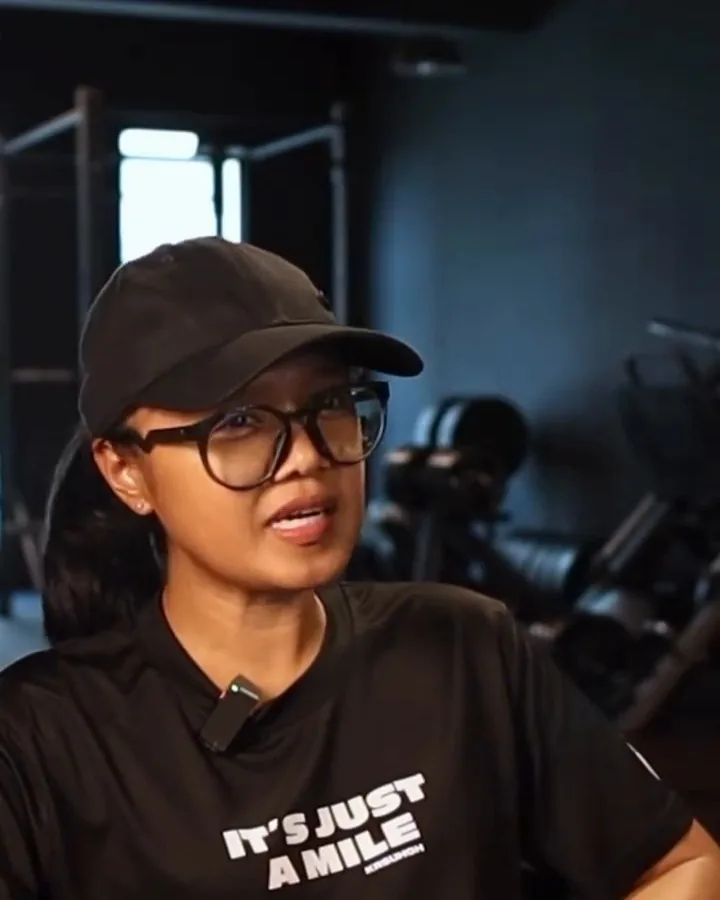
“Running and strength they complement each other tau. Kena ada dua-dua.”
“Running and strength complement each other. You need both.”
I ran six days a week. Monday was my only off day. The rest of the week was easy short runs, and the weekend was my long run.
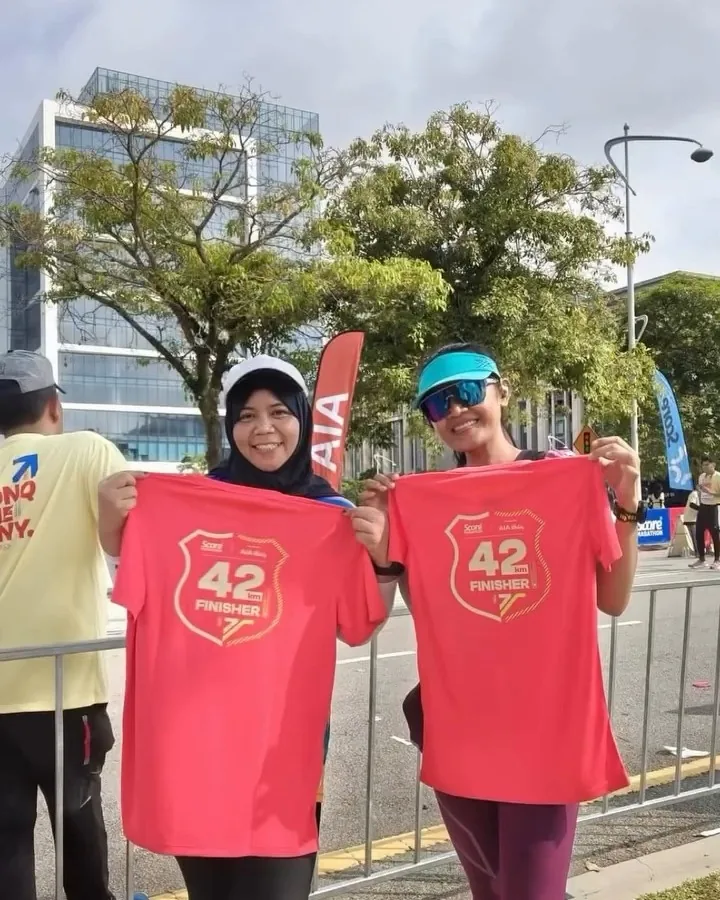
Last year I ran my first full marathon, in July, and my first ultra marathon, at Sekinchan in November.
A few months before, I’d thought about getting a PT. But I didn’t want somewhere crowded. I didn’t know what I was doing, and I was shy.
Then I saw a Fitcave ad. I thought: oh, it’s a private gym, not many people, maybe okay. I still didn’t decide then. I kept the number first.
I had just finished my first ever trail event, 30 km, with no trail training. I’d only trained on the road. The next day I was fine.
Then on the second day after the race, I couldn’t bend down. I had to go and see a doctor. The scan showed swelling in my back. The doctor said no running for two weeks. Walking is fine, but don’t run. And don’t cheat.
Two weeks at home doing what? So I went to Fitcave.
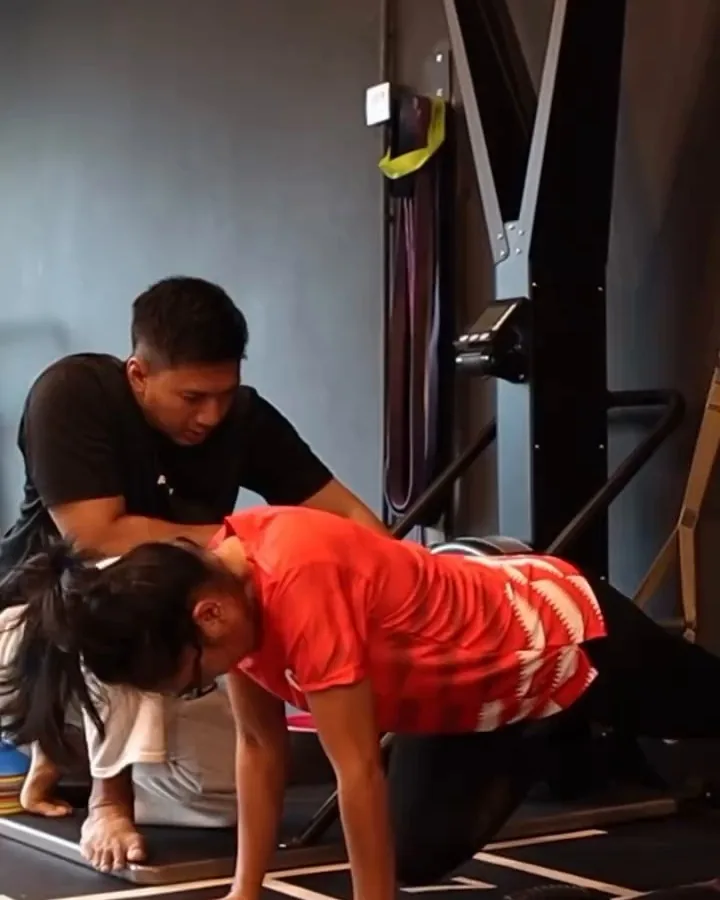
I believe endurance is one part, and strength is the other. Last year, without strength training, my full marathon was about 6 hours 15. This year, 5 hours 10.
In that six-hour race I had pain, cramps, and back pain after the event. This year, surprisingly, nothing. No cramps at all. I noticed it at kilometre 38, right near the end. I could still run and keep up with my friend.
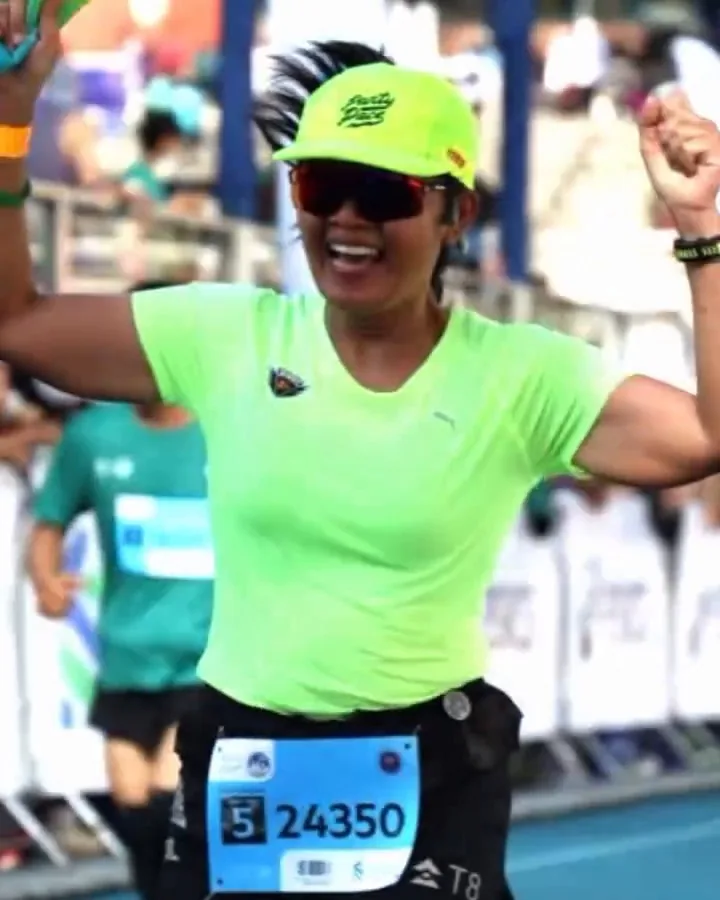
Since joining Fitcave I’ve set PBs at the PJ Half Marathon, at the Boom Run 30 km, and a full marathon PB at KLSCM. Hopefully my next one is a PB at the Sekinchan Ultra.
Coach Syahir: “Her muscular endurance was already there, because she runs. So we worked on her force production. Compared to before, she’s much more stable.”
“This year, surprisingly, no cramps at all.”
Before, I ran every day with no strength work. Now I have two strength days. On Wednesday I do a double session: a hill run in the morning and a speed session at night. Thursday is easy. Friday is strength. Saturday and Sunday are my long runs.
Running and strength complement each other. You need both. Before, I could run far, but without strength I couldn’t hold the pace for long.
Runners have this mindset: I’d rather go for a run than go to the gym, because they worry they’ll be sore before an event. For me it’s different. Let it hurt now, so it won’t hurt on race day.
If you really want to improve your running, you need strength too.
Part one · Watch the interviewHear it from FarinaPart two
Honestly, I didn’t really feel like going into HYROX. But I was more or less forced into it. A friend didn’t have a partner, so I had to join in.
I thought I’d got away with it. Turns out I hadn’t.
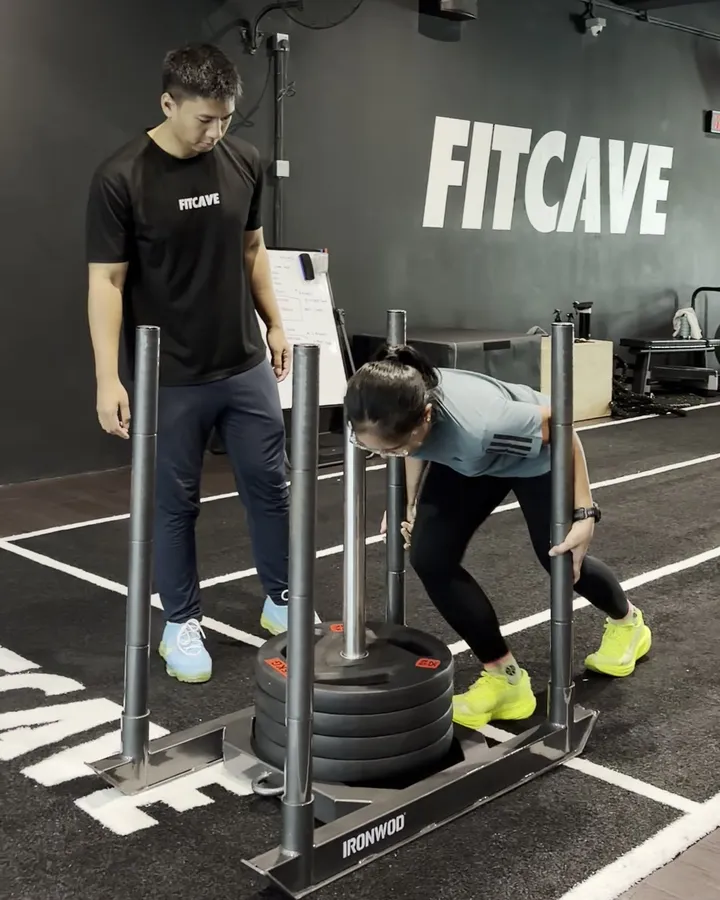
Zero. Years ago, when I was working, I joined a lot of group classes, dance classes and so on, but nothing focused on strength. So this is really my first time. Completely fresh.
At first I didn’t think strength was important. I thought if I went to the gym I’d be too sore to run. So I avoided strength as much as I could.
A lot, actually. Strength, and speed too. And how long I can hold my pace. Before, I could run fast, but I couldn’t hold it for long.
I couldn’t do the long speed sets, the 5-minute and 15-minute threshold efforts. Now I can, alhamdulillah. That’s the strength in my legs.
On long runs I don’t get the pain I used to, and no cramps so far. It’s shortened my recovery too. After a marathon I used to have three or four days of sore legs, and my recovery run would come about a week later. Now I can do a recovery run the very next day.
“After a marathon, I can do a recovery run the very next day.”
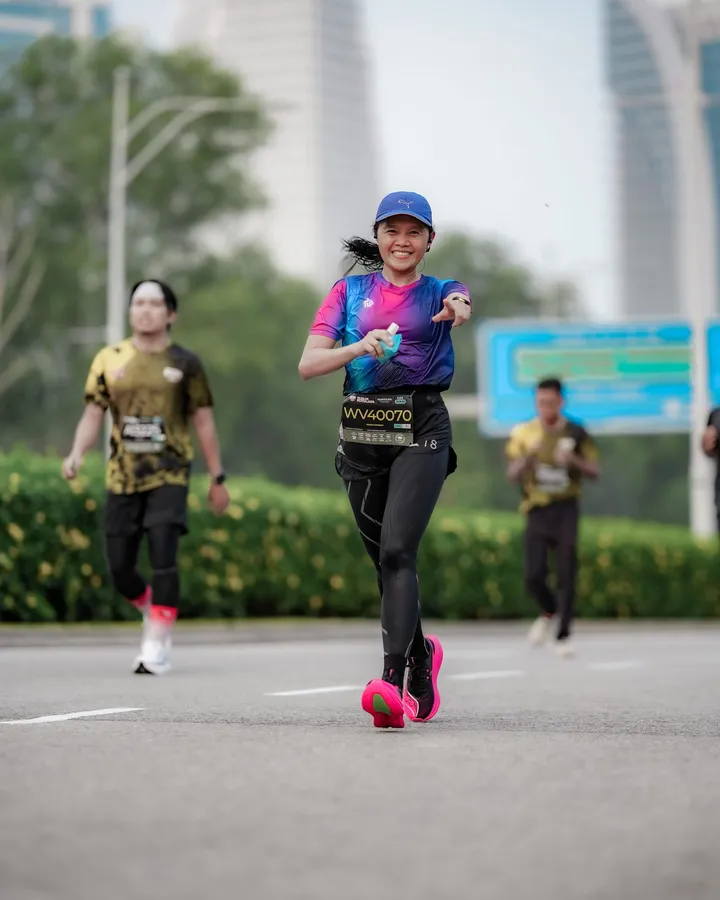
Quite a lot, because I’m not someone who’s really serious about HYROX. I’m more about running performance. So I have to adapt to both: hybrid, as they call it.
You have to load a lot, and eat a lot. Then you have to divide your time between running and HYROX training. They’re two different things, but you have to adapt. It’s hard for me because I’m a runner, not a strength person, so I have to work a bit harder.
But I enjoy it. My anaerobic training has improved, and I’ve realised a lot of that comes from HYROX. When you reach your max heart rate, you can actually push further. I only just realised that.
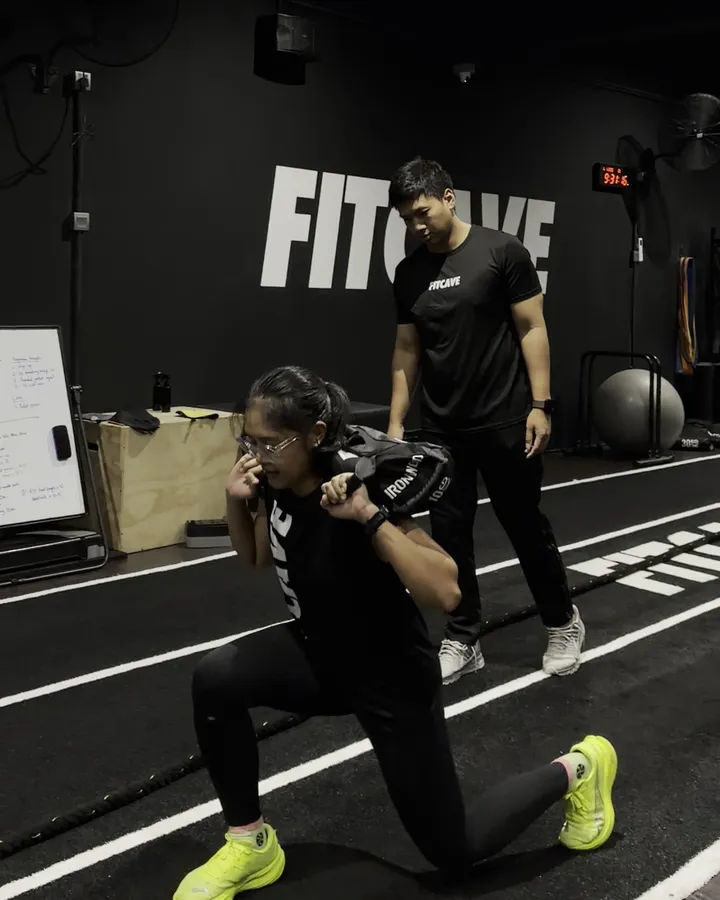
Right now I have two coaches: Coach Awan for my running, and Coach Syahir for my strength and gym training.
I give my running plan to Coach Syahir, and he reworks my training plan around it, and fits in the HYROX work. He has to work hard with me too.
For me, Coach Syahir is very supportive. When I feel I can’t do it any more, he says: no, you can. That makes me feel I can, so I try.
“When I feel I can’t do it any more, he says: no, you can.”
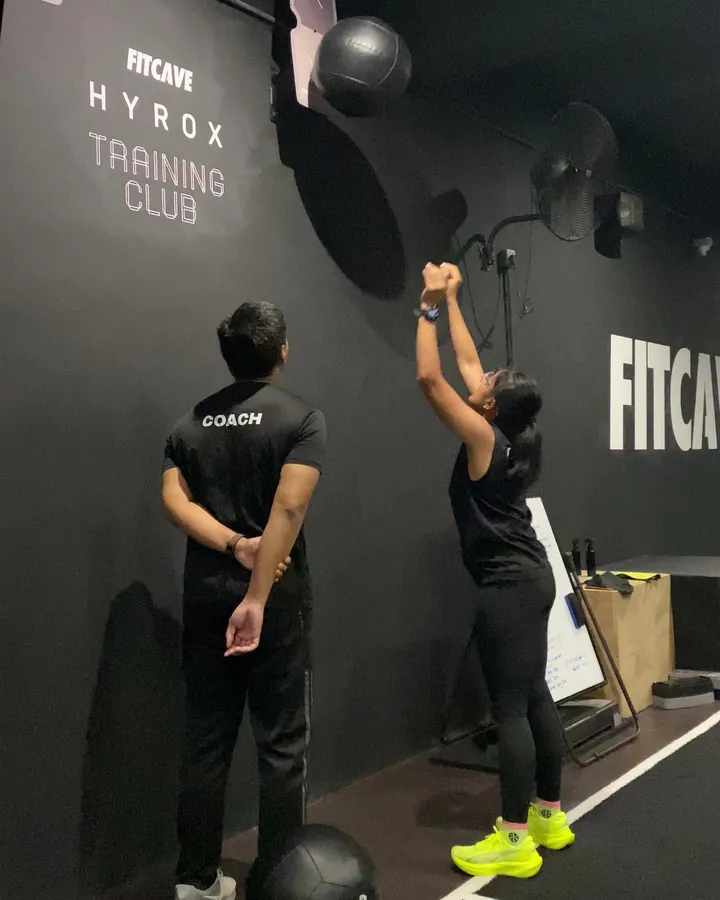
For runners, running by itself isn’t enough. To prevent or minimise injury, you need strength training. At least twice a week, or even once a week, if you’re really focused on your running journey.
Now I’m telling my friends in my running circle to do strength too. Even if they’re already fast, they need it to prevent injury. A few of them have started.
Strength training isn’t about getting strong or getting big. It’s something everyone needs, and it will help you when you’re older, so you’re not walking with a stick, and you can still do your own chores.
To Fitcave, all the best, and I hope it keeps growing. Hopefully more people come to Fitcave to join the programme. I’m happy training here, and I hope you will be too.
Part two · Watch the interviewFrom ultra runner to HYROXTell us your goal. A coach will plan your first session around you.